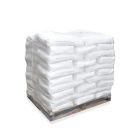

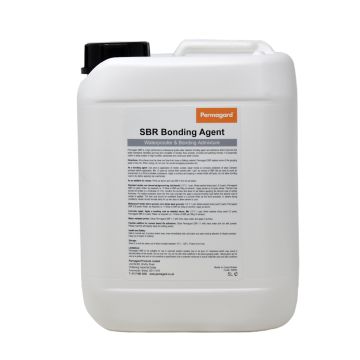
SBR Additive - 5 and 15 litre
A high-performance and multipurpose water-resistant SBR additive. For use as an SBR primer, and creating durable and flexible SBR slurries and renders.
SBR Bonding Additive – 5 Litre and 15 Litre
Permagard SBR is a high-performance SBR additive. It is highly versatile, being effective as an SBR Primer or as an admixture to create SBR slurries and sand/cement renders and other cement-based mixes. It dramatically improves adhesion as well as the water resistance, flexibility and durability of renders and cementitious slurries.
Permagard SBR is available in 5 litre and 15 litre containers.
Our SBR bonding agent is designed for use both externally and internally in areas of intermittent or continuous water contact. It is ideal for dry substrates to prevent suction, as well as non-porous and extremely flat substrates.
Uses of SBR Additive
Our SBR additive can be used in various mixes for different applications. These include:
- SBR Primer – used as a primer on a wide range of surfaces to improve adhesion.
- SBR Slurry – used to improve adhesion and flexibility of cement-based mixes onto surfaces of low suction.
- SBR Render – used as an additive for sand/cement renders to produce dense, impermeable renders in areas where water or chemical resistance is required.
- Bedding Mix – used for bonding tiles, kerb stones, coping stones, mosaics and brick slips.
- Patching Mix – used for patching renders or concrete.
- Damp Proofing – used as a slurry for basements where dampness is expected from behind the plaster.
- Flooring – used to produce high-quality, hard-wearing floors.
How to Use SBR Additive
Each different use of the SBR additive has different mix ratios and application instructions. We cover the three main uses below, but our data sheet features more information on the other applications.
Preparation for Applying SBR
All surfaces should be sound and load bearing. Make sure they are free from anything that could interfere with adhesion, such as loose material, oil, grease and surface water. The surface of the substrate should be dry or matt damp.
SBR Primer
The most common use of the additive is as a water-resistant SBR Primer. When mixed with clean water, it can be spray applied onto a range of surfaces. The SBR Primer will improve the adhesion of screeds, slurries and renders.
SBR Primer Mix Ratio
Simply mix the SBR additive 1:3 with fresh, clean water to create the primer.
Applying SBR Primer
Full PPE should be worn. You can use a brush or a sprayer such as our Tukan Pressure Sprayer to apply the SBR Primer to the surface.
Important Note: Thoroughly clean the spray unit and nozzle immediately after use; otherwise, this could render the spray unit unusable.
SBR Slurry
An SBR bonding slurry is recommended to improve the adhesion of cement-based mixes onto surfaces of low suction. It is also ideal as a treatment prior to applying any SBR-modified mix.
Preparation
Before applying your SBR slurry basecoat, prepare the surface by mechanical scrabbling or grit blasting. This will remove any surface laitance or loose material that may prevent the SBR Slurry from bonding to the surface, giving a clean, freshly exposed surface. If you are dealing with high-suction surfaces, thoroughly dampen them and, if necessary, prime them with an SBR Primer mix before applying the SBR Slurry. The surface should be matt damp with no standing water.
How to Mix SBR Slurry
Start by charging the mixer with the required quantity of sand and cement and pre-mix for approximately one minute. Pour in the required quantity of SBR additive and mix for about 30 seconds only, to minimise air entrainment. Slowly add water while mixing until a smooth, creamy consistency is achieved. Always stop the mixer when testing consistency. The total mixing time after adding the SBR Bonding Additive should not exceed two minutes.
Mix Ratio for SBR Slurry
The approximate SBR slurry mix ratio is 1 part SBR : 1 part water : 5 parts cement (by volume). The resulting SBR cement slurry gives an approximate coverage of 30 m² per 5 litres of SBR per coat.
Note: Do not overmix, as excessive air entrainment should be avoided. Hand mixing is strongly recommended.
Applying the SBR Slurry
The SBR slurry should be brushed vigorously into the surface with a stiff brush to an approximate thickness of 1 mm. Take care to ensure complete coverage. Apply subsequent coatings, such as render or a top coat, while the bonding slurry is still wet. If the slurry dries out, a further coat must be applied at right angles to the first.
SBR Render
By adding SBR additive to renders, you can produce dense, impermeable SBR renders that are ideal for areas where water or chemical resistance is required.
Mix Ratio for SBR Render
For SBR render, follow a mix ratio of 1 part Ordinary Portland Cement : 4.5 parts moist, washed sand : 0.2 parts SBR Bonding Additive, with water as required (i.e. 10 litres of SBR Bonding Additive per 50 kg of cement).
Applying SBR Render
Apply render onto a tacky primer. The first coat should be limited to a thickness of 7 mm. Scratch the surface and allow it to set before applying the second coat of a similar thickness. For added protection, leave the first coat overnight and then apply a second bonding coat before the second render coat. The final coat should be trowelled or floated to a smooth finish as work proceeds. In severe drying conditions, the render should be kept damp for up to two days to allow the cement to cure.
If you need guidance on using SBR Bonding Additive, mix ratios for your application or compatibility with your substrate, Permagard’s technical team are happy to help on 0117 982 3282.
Features
- Improves adhesion and bonding - excellent adhesion to steel & concrete. Sticks well to brick, glass, asphalt, wood, expanded polystyrene and most building materials.
- Suitable for use in damp conditions
- Greatly increases strength
- Improves workability, durability and abrasion resistance
- Reduces shrinkage and cracking and improves flexibility
- Improves chemical and water resistance
- Allows reduction in water content
- 48% solids content (Professional grade)
- Good frost resistance and resistance to waterborne salt penetration
- Enhanced corrosion protection
- Proven performance for 25 years


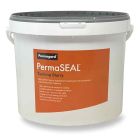
PermaSEAL Tanking Slurry Grey 20kg Bucket